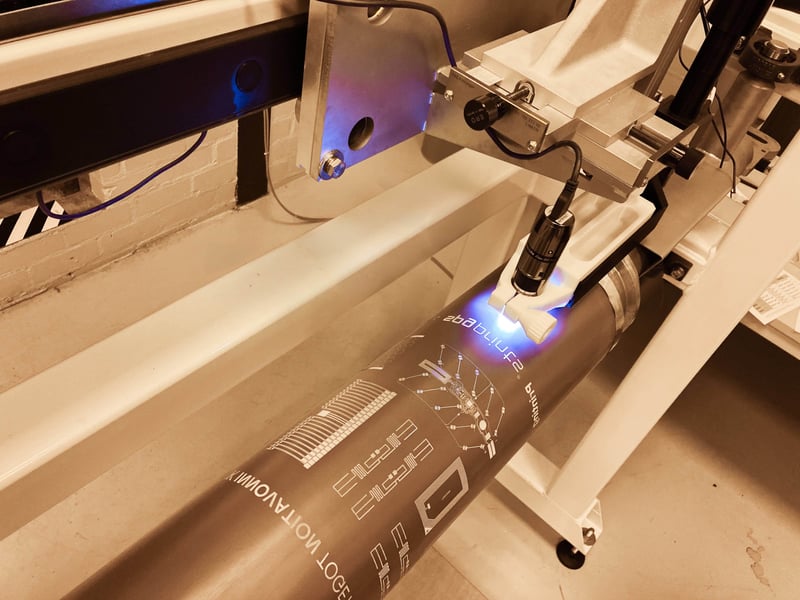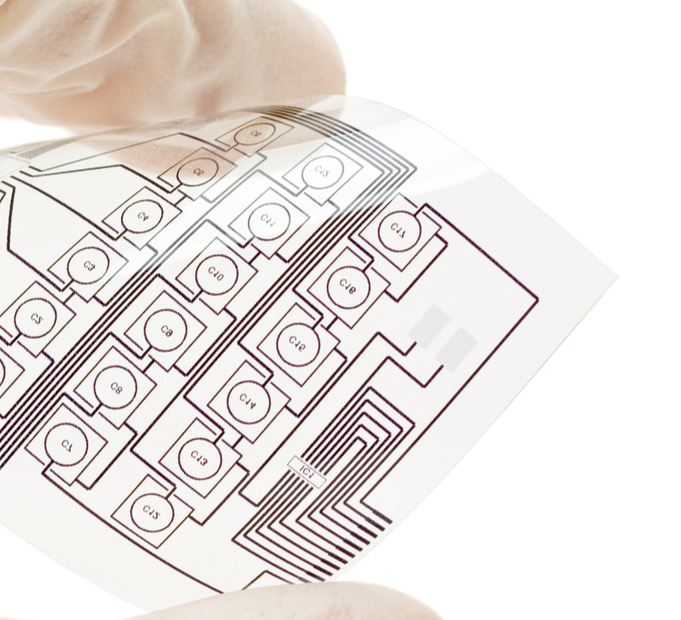
The challenge lies in controlling variation, especially when printing functional features at very small tolerances. In printed electronics, margins matter. And they matter far more than in conventional printing applications.
Why variation is often acceptable in conventional printing
In traditional sectors like labels, packaging, or textiles, print quality is primarily judged by the human eye. Small fluctuations in line width, ink thickness, or registration are generally tolerated as long as the end product looks correct and meets basic visual specifications.
Even when variation occurs, it rarely affects the product's fundamental "look and feel", and it is often completely unnoticeable to the end user. Furthermore, in the traditional printing sectors the printing process is forgiving; a minor deviation early on can often be compensated for elsewhere in the production chain. As a result, these printing companies operate with relatively wide margins where minor deviations are simply viewed as part of normal production rather than a trigger for corrective action.
Functional and printed electronics operate under different rules
Functional and printed electronics fundamentally change this equation. Here, printed layers are not decorative — they are functional. Lines conduct electricity, transfer signals, generate heat or interact with sensors. Variations that would be insignificant in conventional printing can directly impact performance.
Examples include:
- Reduced conductivity due to insufficient ink volume.
- Electrical shorts caused by ink spreading or overflow.
- Inconsistent performance across production batches.
- Lower yield and higher scrap rates.
As designs become finer and functional density increases, these risks grow. The margin for variation narrows, and what was once acceptable becomes a source of failure.
Why margins shrink as applications scale
The impact of these shrinking margins becomes most apparent when an application moves from a controlled lab environment to full-scale production. In a pilot phase, processes are flexible, runs are short, and manual adjustments can correct variations on the fly.
But as applications scale, the conditions shift: volumes increase, tolerances tighten, and processes must remain perfectly stable over much longer runs. At this stage, manual adjustments become costly and disruptive. Variation no longer just affects quality—it threatens production efficiency, delivery reliability, and the total cost of ownership. Margins that were acceptable during development quickly become liabilities in a high-volume environment.
To manage this with rotary screen printing, we must understand the sources of uncertainty. While ink formulation, substrate behaviour, and machine stability are vital, one source is often underestimated: the screen.
Your screen is a vital component
In high-precision printing, the screen is the central pillar determining line width accuracy, ink deposition volume, and repeatability across the entire print area. When screen properties vary, the delicate balance between narrowing lines (to increase density) and maintaining ink volume (to ensure conductivity) is lost. In these cases, the screen is no longer a neutral component; it becomes a variable that directly influences whether a product succeeds or fails.
This requires re-evaluating long-held assumptions—including the idea that a screen is just a standard consumable. By treating the screen as a fully controlled, application-specific component, manufacturers can significantly reduce risk as margins tighten.
As printed electronics continue to unlock new opportunities in the automotive, medical, and communications sectors, the ability to manage variation will become the key differentiator between profitable production and costly rework.
Preparing for the next step in printed electronics
As printed electronics continue to unlock new opportunities in the automotive, medical, and communications sectors, the ability to manage variation will become the key differentiator between profitable production and costly rework.
Understanding where margins matter and why they matter more in functional printing, is an essential first step. Learn how screen quality influences high-precision functional printing.
Or consult our Printed Electronics specialist Ben and get informed on the best screen for your application.