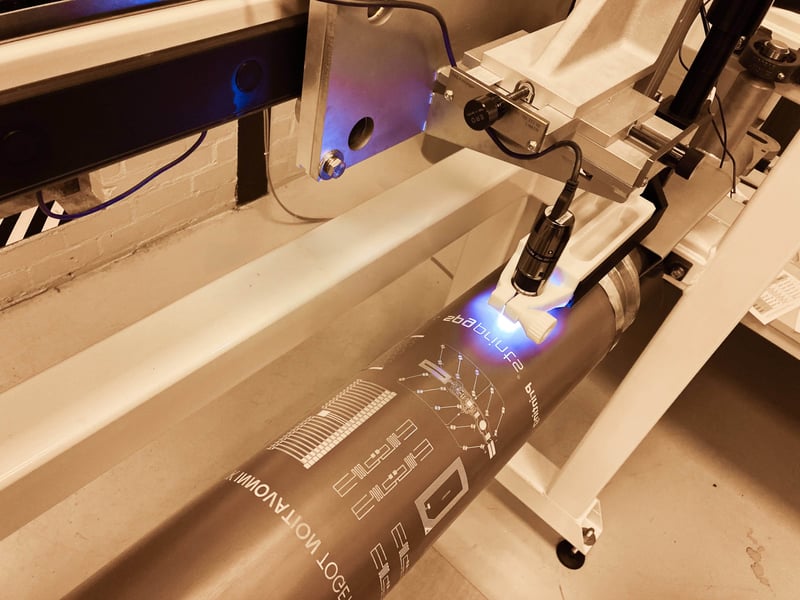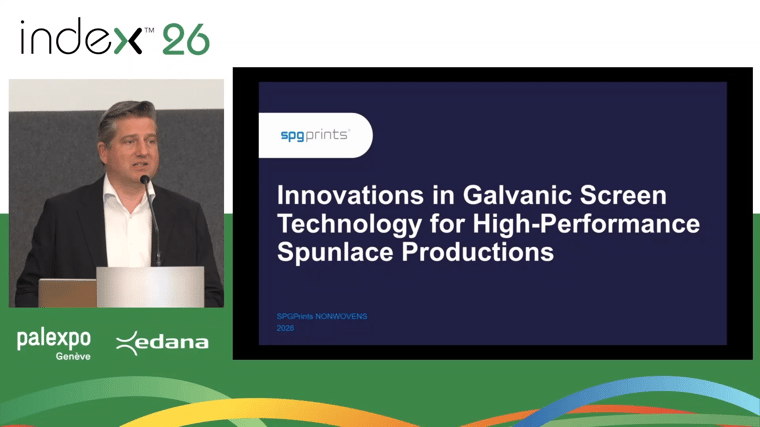
At SPGPrints—a company whose roots run deep into the market's history under our legacy name, Stork—we have spent decades pioneering the science of electroforming. We know that true line optimization doesn't require reinventing your entire multi-million-dollar setup. Instead, it comes down to optimizing the final point of physical contact: the hydroentanglement screen.
The JADE® Principle: Optimizing fluid dynamics for sustainable output
When manufacturers treat forming shells as simple hardware commodities, they artificially cap their machine's performance. Our latest Jade® design technology breaks this limitation by shifting the focus to controlled fluid dynamics.
By analyzing how water jets interact with the screen profile, the Jade® principle delivers documented wins across three critical operational pillars:
- Higher machine speeds with stable MD/CD: Maintain your target Machine Direction to Cross Direction (MD/CD) tensile ratios even as throughput scales.
- Drastically lower power consumption: By utilizing multi-directional rebound, operators can significantly reduce water pump pressure without compromising web bonding. Lower pressure means an immediate drop in weekly utility costs and less wear on expensive hydraulic assets.
- Advanced low-GSM production: Achieve uniform bonding even at lower web weights. JADE's specialized geometry allows high-speed processing of low-density, low-gsm webs without tearing.
- Proven sustainable line integration: JADE is fully compatible with modern Carded Pulp (CP) lines, with proven operational success at speeds up to 270 m/min.
Discover NCS: Seamless, inline patterning and perforation
Traditionally, adding premium aesthetics, branding, or perforation to a nonwoven web required a costly compromise: running a secondary, secondary offline calendering process that slowed down overall throughput and increased capital expenditure.
Our Nickel Compound Screens (NCS) eliminate this bottleneck entirely by bringing premium formatting directly into the main production line.
- 100% Inline Processing: Apply high-definition patterning and perforation effects at full line speed, removing the need for offline finishing machinery.
- Fiber Protection via Galvano Precision: Unlike mechanical alternatives, the nickel galvano electroforming process creates screens with absolutely no sharp edges. This guarantees smooth fiber release without snagging or micro-tearing.
- Infinite Design Flexibility: A wide range of custom geometries, shapes, and structural patterns are possible, allowing brands to quickly pivot to meet consumer trends.
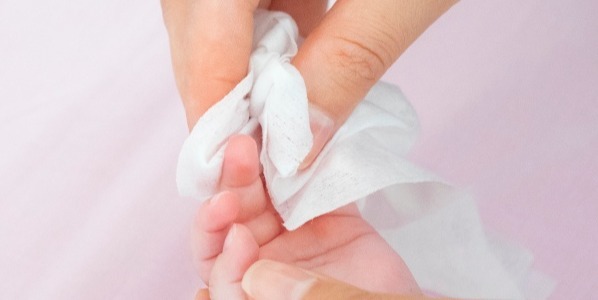
- Gentle on Sensitive Fibers: The seamless surface is perfectly optimized for delicate, high-demand raw materials, including natural cotton, viscose, and carded pulp formulations.
Optimize your production business case
Efficiency isn't just about individual components; it is about how your machinery, chemistry, and screen technology interact. Whether you are looking to lower your line's energy footprint or introduce a new premium product line, you don't have to navigate it alone.
A screen is only as good as the decision behind it. JADE® and NCS deliver their full value when the sourcing choices around them are right, which is exactly what our non-woven strategic guide covers: how the choice of screen or sleeve, and the way you source it, protects uptime and consistency on your spunlace line. Use it to test your own setup before your next order. Download the strategic guide below.

Choose your next step toward spunlace efficiency:
- Review the Industry Case Study: Discover real-world data showing how precision screens achieved a 75 kW reduction in power consumption.
Let’s connect!
Interested in learning how these solutions can benefit your business? Connect with Christian via email to discuss your requirements or schedule a deeper conversation with our experts.